Jim Stone Consulting September Newsletter
Quote for the Week: “Everything can be taken from a man but one thing; the last of human freedoms, to choose one’s attitude in any given set of circumstances.” ~Victor Frankl
What I’m Watching – I watched the Phillies play recently as the MLB season winds down. They did a great piece on Kyle Schwarber, the designated hitter that night. Between his time to hit, Scharber went below the stadium and watched the opposing pitcher on live television. He charted the pitches, focusing on pitching tendencies and location. In addition, the closer he got to his turn at the plate, he took some practice swings, focusing on his hitting mechanics in preparation for his turn at bat. Can this approach to performance be incorporated into your team dynamics? Instead of players standing at the end of the bench, can they sit with assistant coaches to prepare them for entry into the match? Can the coaches question the players about opponent tendencies to keep them mentally involved in the game? Watch More
A Few Observations from the Collegiate Season – As non-conference play winds down, here are a few observations from what I’ve seen so far with the top teams.
- Nebraska has the most physical talent of any team that I’ve seen. They’ve had some inconsistencies, but from my perspective, they are the team to beat in the NCAA Championships in December.
- Although it does not physically match Nebraska, Pittsburgh is talented and good enough to win the national championship. What I’ve always liked about the Pitt program is that it loves competing. It is unafraid of any competitive scenario. Kudos to Head Coach Dan Fisher for instilling this “no fear” attitude into his players. .
- The Big Ten Conference should supply the country with some highly competitive matches. After Nebraska, I see Penn State, Minnesota, Purdue, and Wisconsin as teams with the talent to win quite a few matches. I haven’t seen USC, UCLA, Oregon, or Washington enough to consider their finish. I predict all the teams mentioned above will finish in the top half of the conference with upsets everywhere.
- With conference realignment, I’m curious how cross-country travel in conference play will impact teams’ performance. One scheduling item that caught my eye was UCLA playing at Nebraska on a Friday night and then coming home to play Ohio State on Sunday. While they are in Nebraska, Ohio State is playing on the West Coast at USC and waiting comfortably for UCLA to return from Nebraska for a “home” match. Challenging logistics for the Bruins!!
Numbers That Matter: Numbers are readily available via software or manually with pen and paper to evaluate individual and team performance. Don’t assume all the statistics from a match correlate equally to winning the match or sets. Here are the numbers that I value that will correlate with winning a set.
- Sideout Percentage – (number of sideouts divided by number of attempts to sideout). If your team sideouts at a greater percentage than the opponent, you will probably win the set. If this aspect of the game correlates directly to winning, you should include some form of sideout offense in each practice session.
- How Points Are Earned Per Set – You must have a strategy to get 25 points. The plan changes based on the level of play. For example, in collegiate play, you can generally count on 6-8 points given by opponent errors. Let’s assume your opponent gives you 7 points on their errors. Now, we need to earn 18 points. Most good blocking teams will only score 2-3 points per set via stuff blocks. Against a decent opponent, you can only plan on 2-3 service aces per set. So, between opponent errors (7) and service aces and blocks (6) we are at 13 points. That means the remainder of the points (12) must be scored via attack. The ability of your team to kill the ball on attack is very important. Opponents may make more errors at the younger levels, especially on serve and serve receive. Increased errors by opponents translate to fewer points you must earn.
- Errors Per Set – The fewer errors your team makes, the more points the opponent must earn. The top teams at the recent Paris Olympics only made 4-6 errors per set.
Avoid Recency Bias in Your Decisions: If you take statistics of serve, pass, or attack, ensure your sample size is large enough to provide accurate performance data. Once this data is available, remember that players will revert to their average (mean) numbers. Humans tend to remember what has occurred recently. Coaches, being human, are no different. Avoid the temptation to make substitutions based on the most recent on-court occurrence. A passer that usually passes at a 2.50 efficiency will revert to that number despite having just been aced twice. So, don’t make a rash substitution because of recent events. If a player is a good passer, they will revert to being a good passer despite recent errors. What your focus should be relative to statistics are current numbers but also trending numbers. If the numbers are trending up, players are improving.
A Few Bullet Points on Team Defense For High School Teams
- The blockers and backrow defenders must work together. The block will defend a specific portion of the court while the defenders align themselves around the block.
- Especially at the younger age levels, I would locate my block to channel the attack to my best defenders. For example, I would locate the block to defend the line shot, then place my best defenders in the cross-court area.
- A large number of attacks are tips behind the block. I would play a defense that covers the court area behind the block. I would not count on players “reading” a tip. I would assign a player for all tips.
- Since most sets go to the left-side attacker, if I have a good blocker, I would put them in the right front blocking position. If I don’t have a good blocker, I plan my backrow defense to defend the left-side attack.
- The opponent’s attackers are probably not of equal ability. I would move blockers to be closer to the best attacker, regardless of the court location of that attacker.
- A small blocker does not mean a bad blocker. If they can get their hands over the net, that will enable them to touch the ball on the attack. At the high school level, most attacks are hit 1″ above the net. Equally, a tall blocker does not mean a good blocker. If the block does not penetrate the net with their hands, getting “used” on the block is more likely.
- The middle blocking position requires speedy lateral movement. Put your best “mover” in the middle blocking position. Have your slower players block on the outside. Being tall is not the criteria for a middle blocker, but being quick should be.
Master Coaches Interview- On Volleyball Master Coaches, we interview Jaime Gordon, the Executive Director of the AVCA. He discusses the NCAA rules and structure changes and offers his opinion on future events. A very interesting discussion. INTERVIEW
Consultation Program—If you have questions on any aspect of the game, I’m available to offer some thoughts that might help. Feel free to make an appointment at the link below, and we can chat via Zoom. You can select a free 15-minute chat to discuss your needs, then select a fee-based 30—or 60-minute in-depth discussion.
~Jim
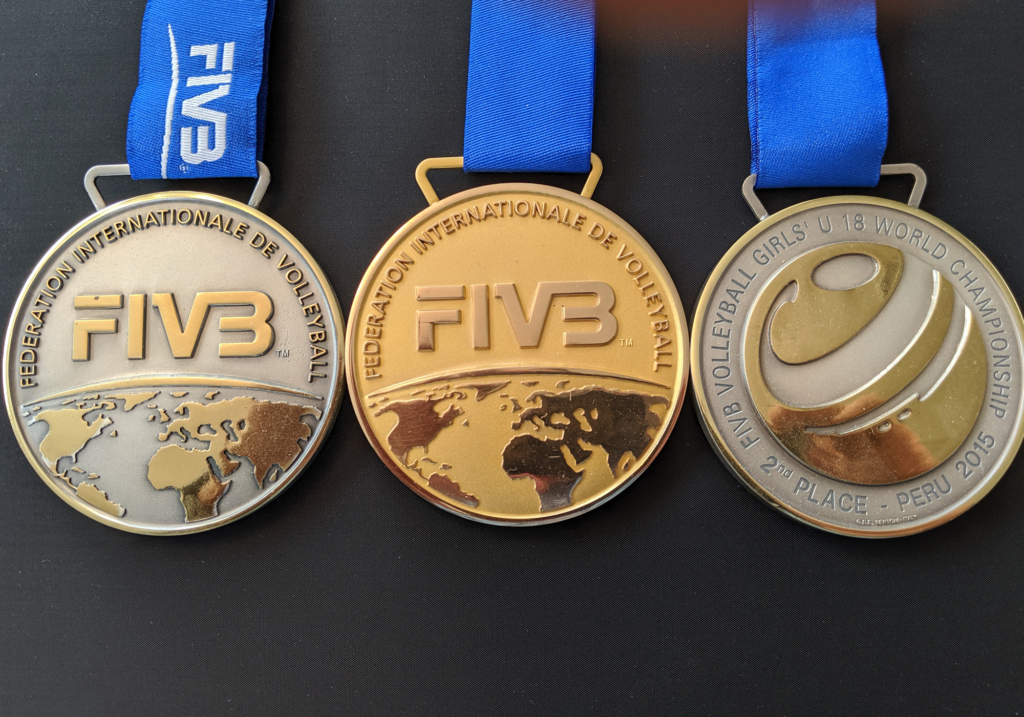
- 2019 Head Coach, USA Girls U-18, FIVB World Champions
- 2013, 2017 Silver Medalist
- Make An Appointment
