Better Routine = Better Performance
A widely cited Duke University study found that approximately 50% of our daily activities are performed out of habit. The mind loves habits because implementing habits expends very little mental energy. Somehow, my shoes get tied every morning without focusing on the mechanics of making a loop with the laces. Or, if the room is dark, I turn on a light automatically. I perform many daily tasks without expending energy thinking about the task details. Of course, habits can be a double-edged sword. Undesirable behavior can also be initiated out of habit.
Most habits don’t start as habits; they start as routines. At first glance, these two terms seem interchangeable. However, the difference is quite stark. Both habits and routines are regular and repeated actions, but habits take place with little or no conscious thought. Meanwhile, routines require a higher degree of intention and effort that leads to positive results. If my routine is getting out of bed every morning at 5:30 am to work out, albeit difficult, it will increase my fitness level. I plan every workout to include cardio and strength training, and monitor progress. It is the daily routine that brings about the desired result. (Full disclosure, I do not use this routine!)

Habits are automatic behaviors initiated with little thought. Good habits can serve a player well by facilitating a rapid response without using mental energy to analyze a situation methodically. Most researchers agree that the rapid response is accomplished by using a “habit loop.” The habit loop has three components: the “cue,” which is the stimulus or trigger that initiates action; the “routine,” which is how the body responds to the cue; and the “reward,” which is the driver for habits by telling the brain that this particular action is worth performing again.
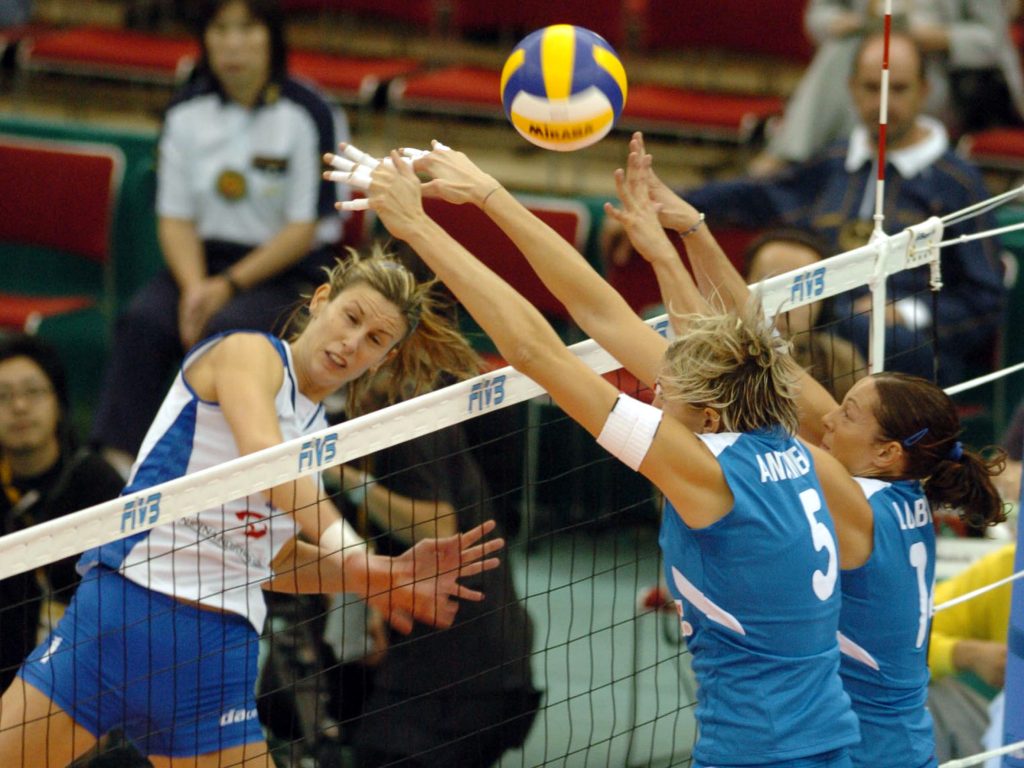
When dealing with many on-court situations, we can put the athlete on “auto-pilot” by using the habit loop, using less mental energy, and facilitating a faster reaction for the athlete. For example, the attacker shows a tip with the attacking hand (cue), the defender recognizes the cue and releases to defend the off-speed shot (response), and the ball is successfully played (reward). This “habit loop” is performed without conscious mental analysis due to the repetitions and feedback the athlete has received during their practice routines.
A closely attached way of implementing the Habit Loop is the concept of “If-Then.” Using the example above, “If you see the open hand by the attacker, then you release for a tip. The concept of If-Then ties directly to cue-response, but might be more easily communicated.
However, players also possess bad habits. How can this happen? It’s not that hard, as the same habit loop is implemented. For example, the left front defender plays a tip shot by the opponent. As soon as they play the ball, the next responsibility is transitioning to an attacker (cue); however, the learned response (bad habit) is not incorporating good attack footwork (response); because of the poor footwork, they couldn’t kill the ball during the attack, but the process was less taxing physically and they kept the ball in play (reward). In this situation, not all rewards serve the team positively, hence the term “bad habit.” If not corrected, the habit remains in place with repetition.
The stronger the connection between the cue and the response, the more ingrained the good or bad habit becomes. Using the same example as above, the player plays the tip (cue), then drops off the net to take a four-step approach (response) and kills the transition attack (reward).
The connection between the cue and the response will strengthen through repetition. This connection’s strength and impact underscore the importance of mindful repetitions during practice.
The Habit Loop and Coaches
To this point, the focus is on how players acquire habits. But what about our coaching habits? If you apply the Habit Loop to coaches, it works the same. Also, similar to player habits, there is the potential for good and bad habits. For example, bad habit: On the first day of practice (cue), the coach dusts off the drill book from last year and runs the same drills (response), and the practice unfolds with minimal fuss (reward). Or, from a more positive perspective, the team has their first day of practice (cue), the coach implements a new warmup routine, replacing the traditional stretching program with a new routine focusing on movement and ball control (response), and the players receive more repetitions of skill-specific movement and increased touches on the ball (reward).
Routines Are The Key to Developing Positive Habits
For volleyball coaches, a sample routine might be meeting with the team 15 minutes before practice to present the focus of the practice, keywords that will be used to emphasize a particular skill component, the drills we are running with the specific areas of emphasis, and the measurable objectives for the practice. The pre-practice information is implemented by focusing on specific aspects of the game with the various planned activities. With daily repetition, routines will allow players to become more knowledgeable about the game and provide the foundation for developing good habits that will result in positive performance during competition.

Coaches can implement a routine into their personal development. The cue might be improving my coaching knowledge; the routine might be spending 30 minutes daily reading or watching instructional videos on skill development, communication skills, game management, or physical training. The reward is being better equipped to present the best learning environment for your team.
Establishing and maintaining a routine is difficult. To make progress, you must be specific about what you desire to accomplish and establish a consistent routine to achieve those results.
How long does it take to show positive on-court results? Whether it’s been thirty or three hundred days doesn’t matter. What matters is the number of times you perform the behavior. The key is repetition. Identify the aspect of the game that you are focusing upon, then what the key components inside that aspect (think keys to the keys), and then develop a plan to relentlessly work with your players to be able to execute consistently. For example, if you only work on blocking footwork once every three weeks, there will be minimal improvement. To increase the consistency of our blocking footwork, identify the key components (starting posture, shuffle step, 3-step crossover, 2-step crossover, 1-step crossover, etc.), break them into manageable parts, and grind away with repetition daily as a component of your routine.
To give you an idea of a sample routine, I listed below the routine that I would do with Chelsey Lockey, who became the all-time assist leader for Florida Gulf Coast University. Chelsey would be ready to go 45 minutes in advance of practice. In that time frame, our routine was mainly footwork-related, which would allow her to handle the variety of situations any setter faces. She did the following sequence:

- L/R – Set/Jump Set
- L/R/L – Set/Jump Set
- L/R – Spin Set/Jump Set
- R – Spin/Jump Set
- L – Plant
- R -Jump
- Setter Attack
- Set low ball with hands and/or forearms
- Set tight passes
Over the 45 minutes, she would set around 300-400 balls. This was before every practice. We didn’t do the entire sequence for every session; we focused on 3-4 items for each practice. I want to underscore that this was a routine before each practice. We practiced 3x per week for five months. Do the math, and you’ll see that Chelsey would set a lot of balls throughout the season. It was not a surprise that she had such a great club and collegiate career. A similar routine was in place when I worked with Olympian Jordyn Poulter for her high school freshman and sophomore years.

The key components to a routine that produces positive results are 1) consistency of the routine, 2) specific objectives, and 3) the athlete is pushed to the edge of their abilities. If you’ve read previous blogs of mine, you’ll notice that these three ingredients are very similar to the components of Cognitive Learning Theory and Deliberate Practice.
I recall swimmer Katie Ledecky being interviewed during an Olympic competition. The interviewer asked how she obtained a performance level that allowed her to win nine Olympic gold medals. The reporter was searching for some “secret sauce” that led to her success. Somewhat confused with the question, Ledecky responded, “I just do the work every day.” As I watched the interview, I recall how great of a response that was to a moronic question. There isn’t a secret sauce to improvement. Becoming great is a daily grind, accurately reflected in Ledecky’s response. Success is the result of a specific and challenging daily routine.
What routines do you implement for your team at every practice session? What components of the game are you repeating daily? Or do you approach practice with the plan of doing a “little of this and a little of that?” What routine can you implement for your coaching development? Any routine has the potential to be very repetitive and tedious, especially when a player is going solo. Work hard to instill a collaborative approach with team members. Get them to buy into the importance and create an energized gym atmosphere while doing the work. The coach sets the tone for these workouts. Be energized, play the music. Try to spice it up by varying the activity while being mindful of content consistency. Think long-term. The goal is not immediate results but establishing a lasting and positive connection in the Habit Loop.
Resources
- Stop Confusing Habits for Routines https://www.nirandfar.com/habits/
- Atomic Habits https://jamesclear.com/atomic-habits
- The Power of Habit https://www.amazon.com/Power-Habit-What-Life-Business/dp/081298160X
- Forming Habits Without Much Ado https://www.weber.edu/academicpeercoaching/blog/forming-habits.html
