October Newsletter
Quote for the Week: “You can’t solve a problem from the level of thinking that created the problem in the first place. “ ~Albert Einstein

What I’m Watching – Ben Josephson, former Canadian Men’s National Team Coach and current Associate Head Coach for Women’s Volleyball at the University of Kentucky, gives an excellent presentation on blocking. Ben breaks down the skill into organizational components, visual cues, and technical considerations. It’s a must-watch for any serious volleyball coach at any level. WATCH
Setting Video: Jing Hou, former setter for the China Men’s Volleyball team, demonstrates some simple drills you can do with your setters. WATCH
Coaching is Forever – The 1994 Ohio State Women’s Volleyball team had a thirty-year reunion last weekend. This exceptional group of women won the Big Ten Championship and proceeded to the NCAA National Semi-Finals. What hit home for me was how vivid their memories were of various scenarios in their career. They would quote what I said or did during practice or after a match. Regardless of their level, all coaches must embrace the idea that what they say and do will last longer than that day or season. Your actions and words will last forever in the minds of the athletes. Make sure your words and behaviors are things that you will take pride in many years from now.
The Importance of Second-Level Thinking:
“First-level thinking is simplistic and superficial, and just about everyone can do it (a bad sign for anything involving an attempt at superiority). All the first-level thinker needs is an opinion about the future (…) Second-level thinking is deep, complex and convoluted.” — Howard Marks, Investor & Writer.
Although challenging, coaches must avoid making important decisions based on first-level thinking. These decisions can be impulsive, without consideration for the ramifications and focus on immediate results. Second-level thinking, on the other hand, digs deeper into the decision-making process. Second-level thinkers will consider the long-term impact of their decisions, whether data back the decision, whether inherent biases are considered, etc.
What is second-level thinking? Second-order thinking is a cognitive process that involves considering the immediate consequences of an action and the secondary and tertiary effects that may result from it. (Psychology Today).
Of course, in the heat of a match, decisions must be made quickly. I encourage coaches to rehearse various scenarios (e.g., the best player gets hurt, one of your most dependable players has a bad match, the referee misses an obvious call, we lose a match that we could win, etc.) and the actions you will take when the unforeseen occurs.
A Few Bullet Points on End-of-Season Practice
- 75% of your practice time should focus on team systems, specifically sideout offense and attack from a dig.
- It’s been a long season, so keep practices short (90 minutes). However, keep the energy high. All drills should incorporate lots of movement, a fast tempo, talk, and positive vibes.
- Create end-of-set scenarios where the first team is ahead (23-21), behind (19-22), or the score is tied. Focus on strategies, low error performance, and performance in pressure situations.
- Focus on what you do well, with less focus on addressing team or individual weaknesses.
- Practice potential game plans with your players, emphasizing 2-3 items that can win points.
- Incorporate sample game plans into your scrimmage sessions. For example, specific serve targets, blocking strategies, and set distribution for your team. All of these items might be used during end-of-year tournaments.
- Make sure your bench players get some reps with the starting unit. You never know who might get hurt; a substitution might be needed.
- Skills and knowledge must be constantly rehearsed. Work on skill refinement with an emphasis on serve and serve-receive. Also, giving quizzes on skills, systems, and opponent scouting will help players improve their cognitive knowledge of the game.
Consultation Program—If you have questions on any aspect of the game, I’m available to offer some thoughts that might help. Feel free to make an appointment at the link below, and we can chat via Zoom. You can select a free 15-minute chat to discuss your needs and then a fee-based 30—or 60-minute in-depth discussion.
Regards
~Jim Stone
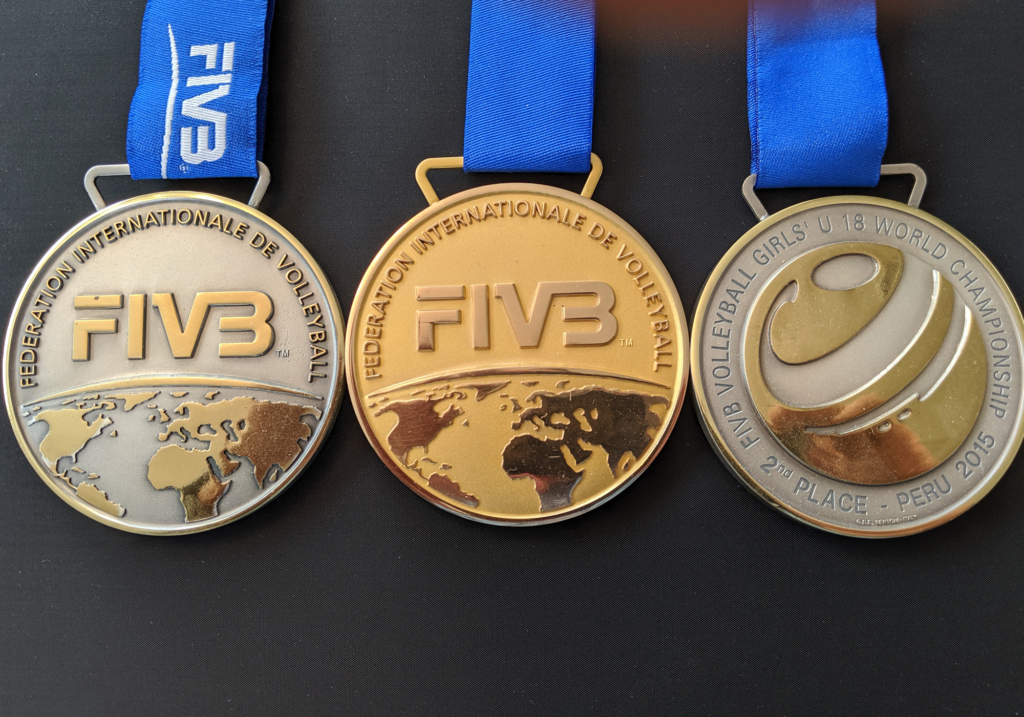
2019 Head Coach, USA Girls U-18, FIVB World Champions2013, 2017 Silver Medalist
