How Might Coaches Benefit From Reflexivity?

“Beware a craftsman who claims twenty years of experience when, in reality, it is one year of experience repeated twenty times” – Chinese proverb
The word for the day is reflexivity, defined as “someone being able to examine their own feelings, reactions, and motives and how these influence what they do or think in a situation.” (Cambridge Dictionary)
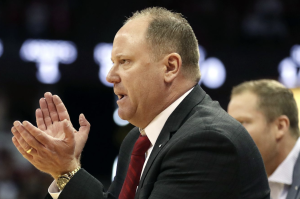
Before the crescendo of “So what’s your point?” hits me with tidal wave force, let me explain. I read an article recently about the University of Wisconsin men’s basketball team changing its game-day routine. I can only guess at the specific motivation for the change of routine. However, regardless of sport, the motivation for change at the Division 1 level is pursuing more wins and offering players the best chance at improving their skills. The coaching staff, led by head coach Greg Gard, did some reflexive thinking and is pursuing a different path this season. Who knows the impact, but as I write this, they are undefeated in the current season, having come off a recent win over the University of Arizona.
Here are some of the changes in their routine on game day (taken from the NYTimes)
“It’s two hours and 10 minutes before tip-off when the first members of Wisconsin’s basketball playing rotation begin to trickle onto the Kohl Center court—time, as it has come to be known, for “vitamins.” Greg Stiemsma has given to this staggered, game-specific shooting session with individual coaching that lasts no longer than 15 minutes per player.
At Stiemsma’s behest, Wisconsin has eschewed the old-school group shoot around five hours before tip-off that kept players on their feet for too long. Now, no more than two rotational players occupy one side of the floor at a time, with guards at one basket and bigs at the other.
Each session is different based on skill set. Some players work on 3-pointers from the wing, running toward the pass and fading to the corner, while others break down imaginary defenders off the dribble or post up on the block. In between, they take free throws.”
Unlike the unfocused “shoot arounds” that most teams implement on game days, Wisconsin is now incorporating the Anders Ericsson principles of deliberate practice.

Closer to our sport, volleyball game-day practices resemble the “shoot around” prevalent in men’s basketball: a little serve and pass, a few attacks, nothing too vigorous, and not focused. Volleyball coaches might consider a different path.
In addition to the pre-game-focused drills, Wisconsin has also added another tweak to its routine.
“Coaches have added a walk-through session called “Shine Time” to make final polishes six hours before tip-off. During Shine Time, the coach who has the opposing team’s scout — associate head coach Joe Krabbenhoft for the Montana State game — spends roughly 15 minutes discussing how the opponent will attack offensively. Krabbenhoft, Penney, Stiemsma, forward Markus Ilver, and a team manager wore blue jerseys with white tops while running through half-court sets to simulate Montana State. The rest of the session was spent with Gard calling out Wisconsin’s offensive sets. “They’re reminders on both ends of the floor because we know with the constant shift in rosters that you may not have a guy here for three or four or five years that understands all the concepts of what we want to do,” Gard says. “So we continue to try to teach and ingrain those at every opportunity you have.”
Changes were also made to the post-game routine.
“When players walk into the team meeting room to review the film of the previous night’s game, they take their seats and see a screen that lists how they performed on their 2024-25 season goals board. It features a list of 10 measures for success that Gard and his staff have determined, with offensive marks in gray, defensive marks in red, and a motion W logo signaling an achieved goal.
They are: 1. Win the game; 2. Offensive points per possession above one point; 3. Defensive points per possession below one point; 4. Fewer than 10 turnovers committed; 5. Make more free throws than the opponent attempts; 6. Defensive effective field goal percentage below 48 percent; 7. Fewer than 28 opponent points in the paint; 8. Fewer than 8 points allowed in transition defense; 9. Defensive rebound percentage of better than 73 percent; 10. More than 6 kills.
The next four minutes are spent evaluating analytics, something Gard has not done before with his players. Players view an advanced shot chart highlighting field-goal percentage on non-transition shots, excluding rim put-backs based on the court’s location. Those markers are in red, yellow, or green, depending on the success rate. The larger the circle around the space, the higher the volume of overall shots taken there.
“Having those numbers up there, having the green spots, having the red spots and just going over where the shots that we want are has been a huge help,” Gilmore says. “We’ve always heard it, and as a player you kind of know, but when you see the stats to back it up, it’s another extra bump in the right direction of, ‘This is what we want and this is what works.”
Coach Gard’s willingness to embrace a new path to teaching his sport might be instructive to all coaches, regardless of their sport. Too many coaches repeat the same routine year after year without the reflexive thought process that there might be a better way. Applying reflexive thinking to coaching requires courage and a growth mindset. I encourage coaches to explore how their practices might be tweaked to improve the athletes’ experience.
I remember visiting a practice by the Hall of Fame, former Louisville head basketball coach Rick Pitino. He structured his daily practices as follows: In the morning before classes, he would work with players in small groups based on position or skill. These sessions were very focused and only lasted forty-five minutes. The team practice in the afternoon only lasted ninety minutes with all activities focused on 5v5 team play. This type of format kept all the sessions short, allowing a more focused effort by the players.
What might be performance and teaching options for the club coach? Here are some things I would consider experimenting with:
- Format your warmup time at tournaments by replacing the robotic hitting lines with fast tempo 5v5 with hitters, blockers, and defenders. A game-like activity better prepares your players for the upcoming match.
- During early-season tournaments, have all players be six rotation players. Have your big players play the outside attacker position, and have your setter block middle, experiment with the backrow attack. As the season unfolds, you get more specific with positional play.
- Instead of boring statistics on a spreadsheet, replace them with graphics communicating the same performance numbers in a different format.
- Establish performance goals that correlate to success. These goals will vary based on the players’ age and skill level.
- Experiment with “on-edge” teaching concepts at the start of practice, perhaps giving written or verbal quizzes on previously presented material.
- Experiment with different training formats and systems with your team. Make sure you allow sufficient time for a new format to provide results.
You are only limited by your imagination, knowledge, and creativity. Most practices at the club level need to incorporate the principles of deliberate practice into their routine. Those who have read my past posts know that I’m a proponent of the concepts of deliberate practice. Coaches need to be very specific about the task at hand and offer feedback specific to the task. Playing endless games of “Queen of the Court” does not always translate to skill development.
I encourage coaches to budget time to think reflexively about the methods and be unafraid of getting out of their coaching comfort zone.
To quote the jazz great Charles Mingus, “You can’t improvise on nothing, man; you’ve gotta improvise on something.” Which might mean for coaches, “you gotta start somewhere.”
